 (316) 435-3509
 office@divine-lawns.com
Essential Lawn Mowing Timing For A Wichita Winter
Introduction: Winters in Wichita KS, have a way of showing up when you least expect them. One week, the lawn still looks like it needs a trim; the next, the mornings are frosty, and the grass feels stiff underfoot. That’s why so many homeowners ask the same thing every year: When is the right time to stop lawn mowing before winter weather blows in? Keep reading, and that niggling question will be clarified soon.
Lawn Mowing For Better Landscaping In Wichita This Winter
Lawn Care Signs The Grass Is Done Growing
In December, the best clue isn’t on the calendar; it’s in the lawn itself. When the yard shifts from weekly lawn mowing to occasional mowing, growth slows for the season. In Wichita KS, the slowdown often begins after repeated cold nights, especially once frost becomes common. If a mower track leaves the grass looking bruised, or the lawn stays flattened for hours, it is usually a sign that the mowing cycle is nearing completion.
A practical way to judge it is to watch how much the lawn grows in seven days. If the grass is only gaining a tiny bit of height, a full lawn mowing schedule is no longer needed. Many homeowners keep mowing out of habit, and that can lead to tearing the blades of grass instead of cutting them cleanly. That kind of damage can show up later as thinning spots in spring.
Wichita Weather Patterns That Change The Mowing Plan
Wichita KS, is known for rapid temperature swings, which makes winter timing tricky. A warm spell can wake the lawn up for a short burst, then the next cold snap shuts it down again. So, the “last” lawn mowing can sometimes happen more than once if the weather flips back and forth. That said, once the weather stabilizes, mowing is typically completed for the season.
The most important weather milestone is the first hard freeze that sticks around. After that point, the grass no longer allocates energy to top growth in the same way, and frequent cutting does not help. It can even stress the turf when it should be resting. A helpful rule for lawn care is this: if the lawn has not needed a cut for about two weeks, it is probably safe to put the mower away.
Lawn Mowing Height Decisions That Prevent Winter Stress
Lawn Care For Final Cut Height In Wichita KS
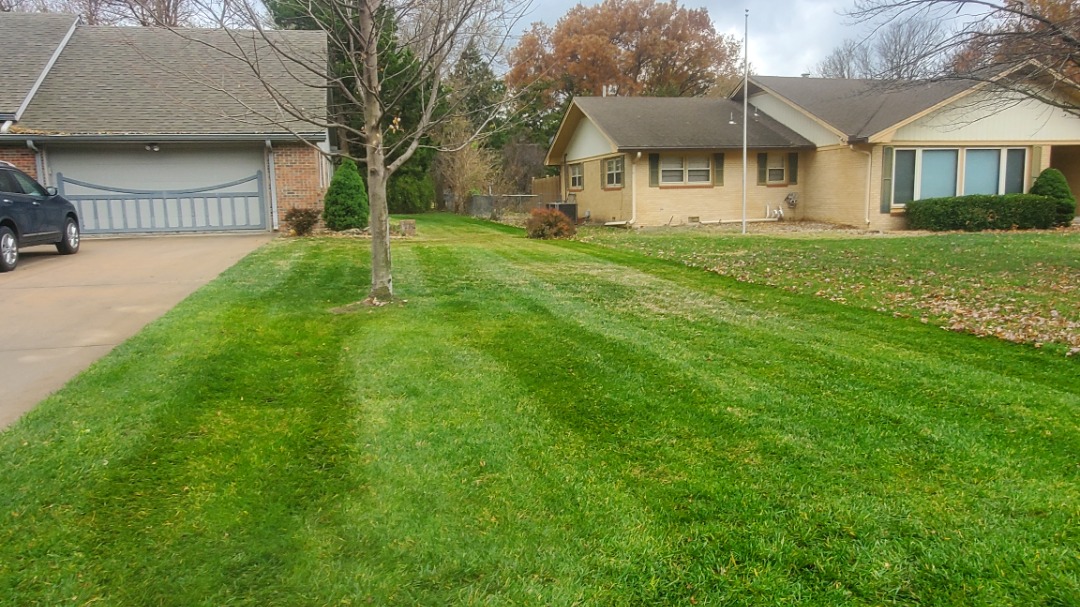
The final mowing height matters more than many people realize. If the grass is left too tall, it can mat under snow or winter moisture, increasing the risk of disease later. If it is cut too short, the lawn can struggle because it loses too much leaf surface right before cold weather settles in. For most yards, the last lawn mowing is about finding a middle ground, not going extreme.
In Wichita KS, many lawns feature cool-season grasses such as tall fescue or Kentucky bluegrass, and some yards also have warm-season grasses such as Bermuda. The type of grass changes what “right height” looks like, but the goal stays the same: a neat cut that does not scalp the lawn. A final mowing that takes off only a small amount is usually safer than a dramatic chop. For solid lawn care, keep the last cut close to their normal fall height.
Wichita KS Grass Types That Affect When To Stop
Cool-season grass can keep growing later into the year, especially during mild stretches. Warm-season grass tends to shut down earlier, often after the first frosts, turning tan and staying that way until it warms up again. That difference is why two neighbors can stop lawn mowing at different times and both be “right.” One yard may still be growing slowly, while the other is fully dormant.
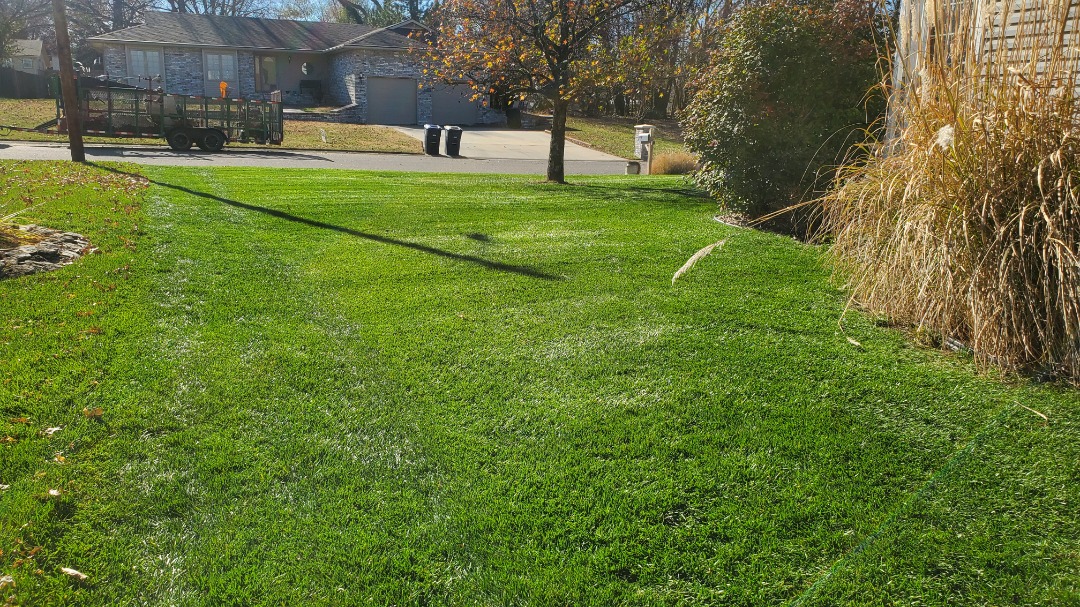
You can closely examine the lawn color and texture for clues. If it’s still green and soft, it may be growing and may need one final mowing before it becomes uneven. If it is mostly dormant, mowing is usually finished unless the lawn has a stray tall patch that needs cleanup. At this point, basic lawn care habits also help, such as keeping the mower blade sharp so the final cut does not shred the grass. A clean cut before winter will result in a better-looking lawn in spring.
Lawn Mowing Mistakes That Show Up In Spring
Lawn Care Problems From Mowing Frozen Or Wet Grass
Once the lawn starts freezing at night, mowing becomes less forgiving. Grass blades can be brittle when frosty, and tires can scuff the turf when it is stiff. That is why late-season mowing should only happen when the grass is dry and temperatures are safely above freezing. If a yard feels crunchy underfoot, it is usually a sign to skip mowing for that day.
In Wichita KS, winter moisture can also make yards soft, even if they appear dry on the surface. Cutting when the ground is soggy can leave ruts that last until spring. It can also compact the soil, making it harder for the lawn to recover later. For reliable lawn care, wait for a dry afternoon before mowing if the last mow is truly needed. It is often better to leave it alone than to mow it under poor conditions.
Wichita KS Timing That Helps Avoid Scalping And Thin Spots
A common late-season mistake is doing one last “super short” mow to try to prevent winter problems. The idea sounds helpful, but scalping is one of the fastest ways to create weak turf. Short grass entering winter has less crown protection, and it can dry out or be damaged when cold winds hit.
The healthier approach is to treat the final lawn mowing as a finishing touch, not a full-on reset. If the lawn still has some growth left, mowing at a reasonable height keeps it tidy without stressing it. A good seasonal routine for lawn care is to pair the end of mowing with simple upkeep, such as leaf cleanup, because matted leaves can smother grass faster than slightly taller blades ever will.

Conclusion
By December in Wichita KS most lawns are very close to done growing. The final lawn mowing should occur when the grass is no longer growing and is still dry, not frozen. It also helps to keep the last cut sensible, because scalping can cause more trouble than it solves. We at Divine Lawns bring exquisite craftsmanship, a personalized approach, and exceptional service to every property. If you want help deciding when to wrap up mowing and stay on track with your lawn care, contact us, and we will take care of it.


Stephanie D.
Nolan A.
Tom F.
Anthony H.
